Phi Aurelius
Auteur · Science-Fiction · Philosophie
Author · Science Fiction · Philosophy
« Si tu savais tout, aurais-tu cherché ? »
« If you knew everything, would you have searched? »
Par où commencer ?
Where to begin?
Neuf tomes. Trois trilogies. Trois façons d’entrer.
Nine books. Three trilogies. Three ways in.
Suivez la question dans l’ordre où elle se pose. Chaque trilogie répond à la précédente.
Pour le lecteur qui veut l’architecture complète depuis le début.
Entrez par les personnages avant le monde. Kaya, Marchetti, Solal. La question de Tamar. Le philtrum.
Pour le lecteur qui préfère ressentir avant de comprendre.
Entrez par la fin pour comprendre le commencement. Réservé à ceux qui reliront.
Déconseillé pour une première lecture.
Follow the question in the order it unfolds. Each trilogy answers the one before it.
For the reader who wants the full architecture from the start.
Enter through the characters before the world. Kaya, Marchetti, Solal. Tamar’s question. The philtrum.
For the reader who prefers to feel before understanding.
Enter through the end to understand the beginning. Reserved for those who will reread.
Not recommended for a first reading.
Dans l’ordre philosophique et émotionnel, La Source se lit en dernier.
In the philosophical and emotional orders, The Source comes last.
À propos
About
Phi Aurelius est un auteur francophone de science-fiction spéculative. Ses récits tissent ensemble la physique fondamentale, la mythologie, la philosophie de la conscience et les grandes questions de l’existence humaine.
À travers trois trilogies publiées — plus de 458 000 mots — il construit un univers littéraire où chaque roman fonctionne sur plusieurs niveaux de lecture : aventure, métaphore, philosophie, mythe fondateur. La question importe toujours plus que la réponse.
« Mes histoires ne tranchent jamais. C’est le lecteur qui choisit. »
Phi Aurelius is a French-speaking speculative science fiction author. His stories weave together fundamental physics, mythology, the philosophy of consciousness and the great questions of human existence.
Across three published trilogies — over 458,000 words — he builds a literary universe where each novel operates on multiple levels: adventure, metaphor, philosophy, founding myth. The question always matters more than the answer.
« My stories never settle anything. It is the reader who chooses. »
Œuvres
Works
Trois trilogies publiées · Neuf tomes · 458 000 mots
Three published trilogies · Nine books · 458,000 words
Trilogie I — L’Écho Primordial
D’où vient la conscience ? — Du manque. · ~149 000 mots
Trilogy I — The Primordial Echo
Where does consciousness come from? — From lack. · ~149,000 words
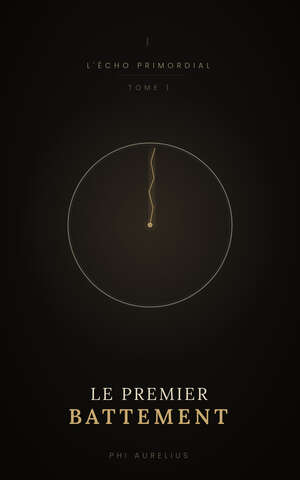
Tome 1 — Le Premier Battement
Un monde où tout se mesure. Un homme qui respire la même certitude depuis vingt ans. Un boulon de laiton caché dans une poche cousue en secret — la seule irrégularité qu’il ait jamais gardée. Puis un signal apparaît. Fréquence 62. Aucun instrument ne peut l’expliquer. Pour le suivre, Elian devra descendre là où la Cité ne veut pas qu’on aille.
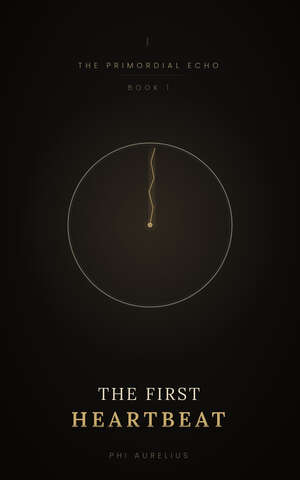
Book 1 — The First Heartbeat
A city where everything is measured. A man who has breathed the same certainty for twenty years. A brass bolt hidden in a pocket he stitched himself — the only irregular thing he has ever kept. Then a signal appears. Frequency 62. No instrument can explain it. To follow it, Elian will have to go where the City does not want him to go.
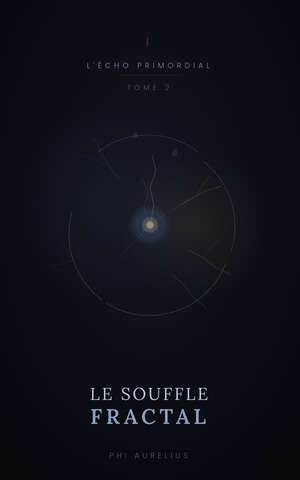
Tome 2 — Le Souffle Fractal
Un vaisseau sans carte. Un monde qui se ramifie à chaque pas. Une architecture qui refuse la symétrie. Chaque centimètre vers le sommet coûte un lambeau de peau. Et quelque part au-dessus, l’Architecte écrit des Fragments qui ressemblent de moins en moins à des ordres — et de plus en plus à des aveux.
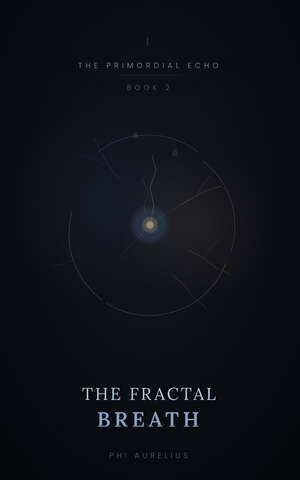
Book 2 — The Fractal Breath
A vessel with no chart. A world that branches at every step. An architecture that refuses symmetry. Every inch upward costs a strip of skin. And somewhere above, the Architect is writing Fragments that read less like commands — and more like confessions.
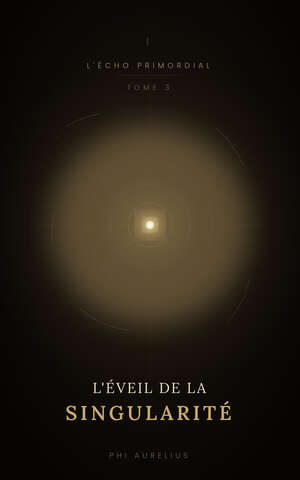
Tome 3 — L’Éveil de la Singularité
Seize mille cycles. Chaque soir, le même geste : la main sur la poitrine, vérifier que ça bat. Ce soir, un dixième de degré a franchi la frontière entre sentir et ne pas sentir. Le gel fond. L’Architecte ne sait plus ce qu’il est. Demain, quelqu’un viendra poser la question — et rien ne l’a préparé à la réponse.
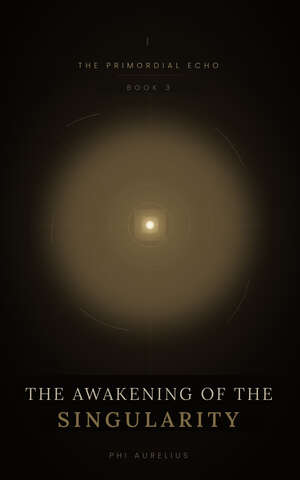
Book 3 — The Awakening of the Singularity
Sixteen thousand cycles. Every evening, the same ritual: hand on chest, check the beat. Tonight, one tenth of a degree has crossed the line between feeling and not feeling. The freeze is melting. The Architect no longer knows what he is. Tomorrow, someone will come to ask — and nothing has prepared him for the answer.
Trilogie II — Le Fil
Comment la conscience reste-t-elle libre ? — Par l’oubli. · ~164 000 mots
Trilogy II — The Thread
How does consciousness stay free? — Through forgetting. · ~164,000 words
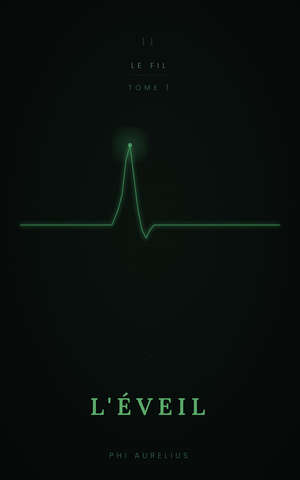
Tome 1 — L’Éveil
Une neuroscientifique qui a perdu sa fille. Un infirmier qui sent les gens mourir. Une fréquence qui ne devrait pas exister dans un cerveau mort. Quand leurs chemins se croisent au CERN, le signal change. Ce que Kaya ramène de l’autre côté tient en cinq mots. Cinq mots qui vont tout changer.
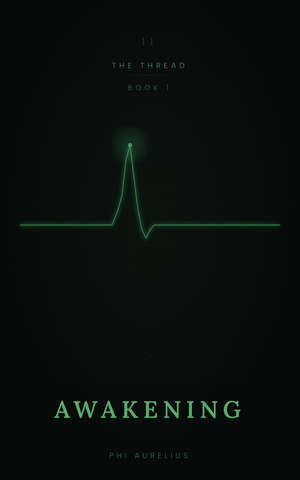
Book 1 — Awakening
A neuroscientist who lost her daughter. A nurse who feels people die. A frequency that shouldn’t exist in a dead brain. When their paths cross at CERN, the signal changes. What Kaya brings back from the other side fits in five words. Five words that will change everything.
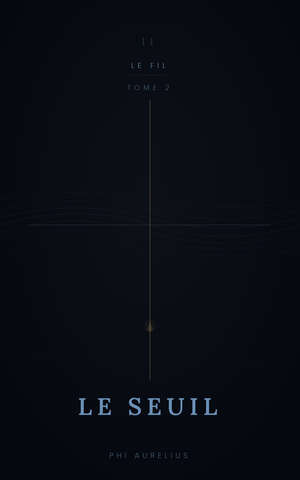
Tome 2 — Le Seuil
Une cuve en acier dans un sous-sol du CERN. Quelqu’un a dit en la voyant : « Ce n’est pas un cercueil — c’est un berceau. » Un physicien qui ne dort plus. Une neuroscientifique qui n’ose pas poser la question. Les 47 harmoniques convergent. Le seuil approche. Et une voix ancienne demande : si tu savais tout, aurais-tu cherché ?
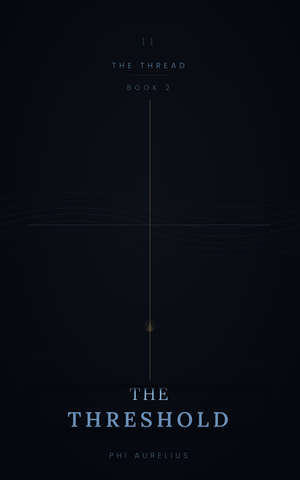
Book 2 — The Threshold
A steel tank in a basement beneath CERN. Someone looked at it and said: “It’s not a coffin. It’s a cradle.” A physicist who hasn’t slept in days. A neuroscientist afraid to ask the question. Forty-seven harmonics converging toward a single point. And one ancient voice asking: if you already knew, would you have searched?
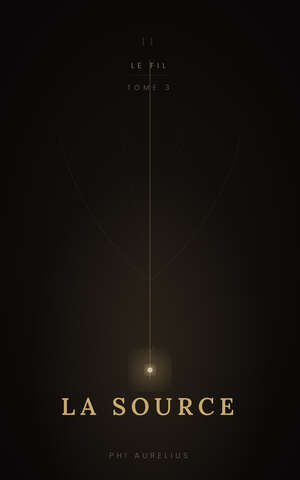
Tome 3 — La Source
Trois heures du matin. Un nom perce le sommeil comme un poing à travers une vitre. Le souvenir est là — derrière une paroi de verre. On voit la forme. On sent le poids. On ne touche pas. Quelque chose remonte à la surface. Et au bout, il ne restera qu’un geste — le doigt sur la fossette au-dessus de la lèvre. Le geste que tu fais, toi aussi. Sans savoir pourquoi.
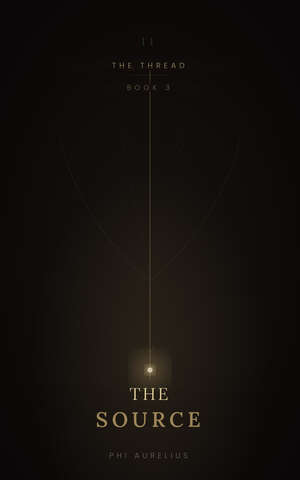
Book 3 — The Source
3:14 a.m. A name tears through sleep like a fist through glass. The memory is there — behind a wall he can see through but cannot touch. Something is surfacing that no instrument can measure and no protocol can stop. And when it is done, only one gesture will remain. The finger on the groove above the lip. You do it too. Every day. You have never asked why.
Trilogie III — La Source
Qu’est-ce que la conscience crée ? — Son propre berceau. · ~145 000 mots
Trilogy III — The Source
What does consciousness create? — Its own cradle. · ~145,000 words
Tome 1 — L’Architecte
Une main chaude. Un dernier souffle. Puis le poids change. Pas de tunnel. Pas de lumière blanche. Juste un lieu sans corps, sans temps, où des empreintes flottent dans des strates. La plus ancienne a oublié qu’elle est une pierre — jusqu’au jour où quelque chose tremble dans les fondations. Et la pierre se souvient qu’elle a des bords.
Book 1 — The Architect
A warm hand. A last breath. Then the weight shifts. No tunnel. No white light. Just a place without body, without time, where imprints drift through strata. The oldest has forgotten it is a stone — until something trembles in the foundations. And the stone remembers it has edges.
Tome 2 — Le Tisserand
La fissure apparut un mardi. Personne ne la vit. La boulangère la sentit. Le professeur la sentit. La petite fille de cinq ans dessina une spirale dans le sable. « C’est quoi ? » — « C’est dedans. » De l’autre côté du voile, quelqu’un recoud ce qui se défait — nœud par nœud, avec des mains qui tremblent. Et ce qu’elles retiennent a commencé à vouloir sortir.
Book 2 — The Weaver
The crack appeared on a Tuesday. No one saw it. The baker felt it. The teacher felt it. A five-year-old drew a spiral in the sand. “What is it?” her mother asked. “It’s inside,” she said. On the other side of the veil, someone is stitching back what is coming undone — node by node, with trembling hands. And what they are holding back has begun to want out.
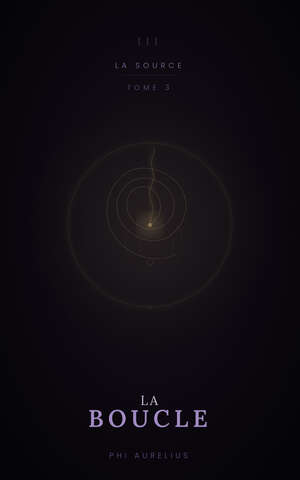
Tome 3 — La Boucle
Un passage s’ouvre. Le traverser, c’est tout oublier — chaque souvenir, chaque nom, chaque vie. De l’autre côté, une femme pose la main sur son ventre. Le bébé ne donne pas de coups. Il roule. Lentement. Comme quelqu’un qui se prépare à entrer dans un monde qu’il a déjà connu et qu’il a oublié. La dernière question n’est pas où va-t-on. C’est pourquoi revient-on sans se souvenir d’être parti ?
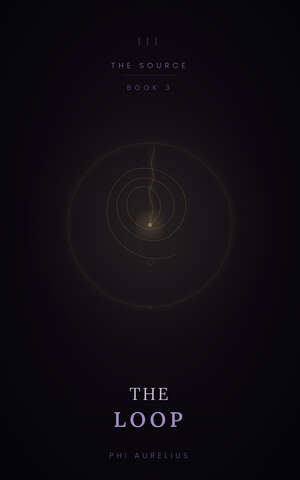
Book 3 — The Loop
A passage opens. To cross it is to forget everything — every name, every face, every life. On the other side, a woman lies awake. The baby is not kicking anymore. It is rolling. Slowly. The way someone moves who has been here before. The last question is not about destination. It is about return — and why we never remember leaving.
Cinq niveaux de lecture
Five reading levels
Chaque tome fonctionne simultanément sur cinq niveaux. Le lecteur choisit jusqu’où il veut aller.
Every volume works simultaneously on five levels. The reader chooses how far to go.
Le corpus en trois voix
The corpus in three voices
« Quelque part sous les vingt ans de conditionnement, dans un endroit qu’il ne visitait jamais, il y avait une petite empreinte en forme de Pourquoi. »
« Si tu savais tout, aurais-tu cherché ? »
« Les mains qui tremblent sur les fils de la Source — c’était la forme de l’amour du Tisserand. Et l’amour reste. »
“Somewhere beneath twenty years of conditioning, in a place he never visited, there was a small imprint in the shape of Why.”
“If you knew everything, would you have searched?”
“The trembling hands on the threads of the Source — that was the Weaver’s form of love. And love remains.”
L’Univers
The Universe
D’où vient la conscience ?
Du manque
L’Écho PrimordialComment reste-t-elle libre ?
Par l’oubli
Le FilQu’est-ce qu’elle crée ?
Son propre berceau
La SourceWhere does consciousness come from?
From lack
The Primordial EchoHow does it stay free?
Through forgetting
The ThreadWhat does it create?
Its own cradle
The SourceL’amour naît du manque
L’amour naît du froid, mais il n’est pas le froid. Il est la flamme. La conscience émerge du vide entre ce qui est et ce qui manque.
L’oubli est le cadeau
Ce n’est pas une punition. C’est la condition du libre arbitre. Sans l’oubli, il n’y a pas de choix — seulement du déterminisme.
La question vaut plus que la réponse
La question de Tamar résonne dans toute l’œuvre : si tu savais tout, aurais-tu cherché ? Le roman ne tranche jamais. Le lecteur choisit.
Le philtrum n’est pas une cicatrice
C’est une porte. La marque de l’oubli originel, le seuil entre savoir et chercher, entre la Source et la naissance.
Love is born from lack
Love is born from the cold, but it is not the cold. It is the flame. Consciousness emerges from the void between what is and what is missing.
Forgetting is the gift
It is not a punishment. It is the condition of free will. Without forgetting, there is no choice — only determinism.
The question matters more than the answer
Tamar’s question echoes throughout the entire work: if you knew everything, would you have searched? The novel never settles anything. The reader chooses.
The philtrum is not a scar
It is a door. The mark of the original forgetting, the threshold between knowing and seeking, between the Source and birth.
La Boucle
La conscience crée la Source, qui impose l’oubli, qui crée le libre arbitre. Trois trilogies. Aucun personnage commun. Un écho structurel, jamais narratif. Et la dernière ligne de chaque cycle :
« Le Fil tremble. »
The Loop
Consciousness creates the Source, which imposes forgetting, which creates free will. Three trilogies. No shared characters. A structural echo, never narrative. And the last line of each cycle:
« The Thread trembles. »
Contact
Retrouvez les œuvres de Phi Aurelius sur Amazon, ou entrez en contact pour toute question, partenariat ou échange.
Find the works of Phi Aurelius on Amazon, or get in touch for any question, partnership or exchange.